What is a cat stain? Why does it have many different colored patterns?
What is a cat stain? Why does it have many different colored patterns?
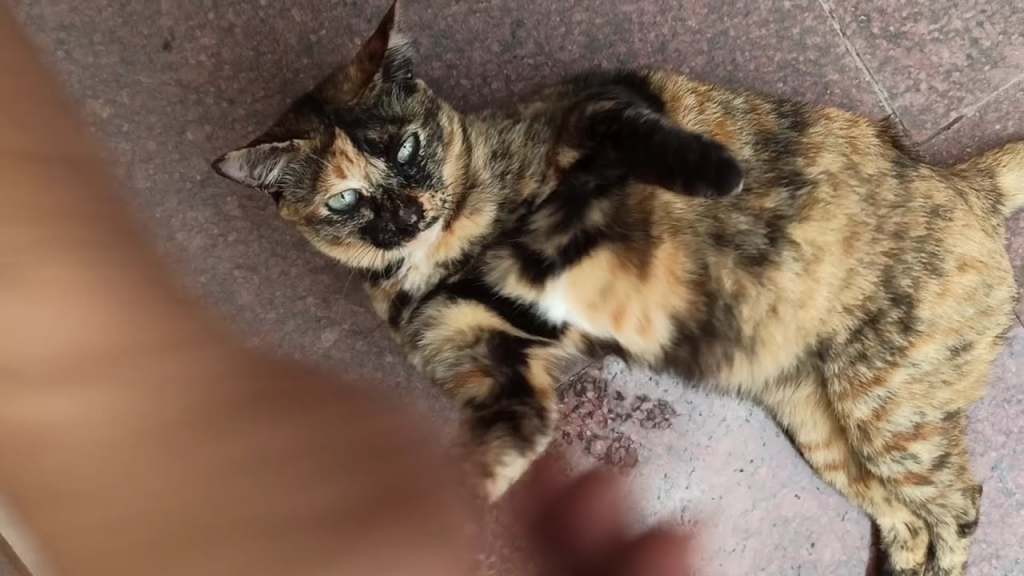
When talking about ” soiled cat “, many people may think of a tricolor cat with white as the main component. But in fact, the tortoiseshell cat has another form that is equally outstanding. Which is the “Tortoiseshell cat” or Thais sometimes call it “soiled cat” or “turtleshell cat” because it has a pattern that resembles a turtle shell. Tortoiseshell cats stand out with two main colors of fur: black (or dark brown/dark gray) and orange (or red/cream). That are naturally blended together. There are no large patches of white, resulting in a complex and unique pattern in each cat. This article will take you to get to know the Tortoiseshell cat better.
Get to know ” Tortoiseshell Cat” What is it?
The Tortoiseshell Cat is not a breed name, but rather a characteristic of the เล่น UFABET ผ่านมือถือ สะดวกทุกที่ ทุกเวลา color and coat pattern that can be found in many different breeds of cats. Including the common domestic shorthair/longhair. As well as purebreds such as American Shorthair, British Shorthair, Maine Coon, Persian, and others. What makes the Tortoiseshell Cat unique:
- The two main colors are: Black and Orange (Orange/Red/Cream) without any large white patches (if there are large white patches. It is called Calico Cat).
- Complex Patterns: The two colors blend together to form a pattern of spots, patches, stripes, or marbles all over the body, giving each individual a completely unique pattern.
- Shade Variation: Black can appear as a dark grey (Blue/Grey Tortie) or chocolate brown (Chocolate Tortie), while orange can also appear as a deep red, cream or apricot.
Why do cats come in many colors and are mostly female?
The mechanism of polychromaticity in tortoiseshell cats This is why there are so many different colored cats, and most of them are female.
- Two Color Genes in One Since female cats have two X chromosomes. They can carry both the orange (from one X) and the black (from the other X) coat color genes at the same time.
Say one X chromosome carries the gene for orange coat color (we’ll just call it X orange), and the other X chromosome carries the gene for black coat color (X black). Then the female cat will have X orange and black chromosomes. - Random inactivation of the X chromosome (X-inactivation)
- During the embryonic stage of a female cat, each cell in her body randomly “turns off” one of her X chromosomes.
- Some cells will be selected to be off. Orange X: Makes the cell display in black.
- Some cells will have the X off: Black: This will cause the cell to display orange.
- This random process occurs throughout the body, and these cells continue to divide, forming groups of cells that express different colors.
- As these cells develop into skin and hair, we see alternating black and orange patches or spots all over the tortoiseshell cat’s body.
Why are male cats so rare?
- Male cats have only one X chromosome (XY), so they can only carry one primary coat color gene: either orange or black. They cannot have both colors in a spotted coat.
- Extremely rare exception: Male Tortoiseshell cats can only be born with a genetic disorder, such as having an extra X chromosome, making them XXY (a condition called Klinefelter Syndrome). This gives them two X chromosomes like females and allows them to have multiple colored markings. This is very rare (about 1 in 3,000 kittens), and males in these cats are usually sterile.
Tortoiseshell cats are the perfect example of natural beauty that comes from the wonders of genetics. Not only do they have beautiful and unique coat patterns. But they also come with distinct personalities and charm that make many people fall in love with them. If you are one of those who are considering adopting a Tortoiseshell cat as a new member of your home. You are sure to experience the uniqueness and love that these colorful cats bring to you.